The Fresno Unified School District, the fourth-largest school district in California with more than 70,000 students across over 100 schools, represents one of the most significant commercial roofing client segments in the Central Valley. With a building stock spanning everything from 1920s-era elementary schools in the Tower District to modern campuses in Clovis-adjacent neighborhoods, Fresno Unified's roofing needs are constant, varied, and governed by a regulatory framework that makes California school roofing among the most complex public construction work in the nation. Contractors who succeed in this market understand that technical competence is only part of the equation — compliance with California's prevailing wage laws, Department of the State Architect (DSA) oversight, and the district's procurement processes are equally essential.
Prevailing wage is a non-negotiable requirement for any roofing work performed on a California public school under a contract with Fresno Unified or any other California school district. The prevailing wage rates for commercial roofers in Fresno County are established by the California Department of Industrial Relations and must be paid to all craft workers on covered projects. Contractors who attempt to compete by underpaying their workforce risk DIR audits, substantial penalties, and debarment from future public work. Union contractors and qualified open-shop contractors who fully comply with prevailing wage requirements compete on essentially equal footing, and the district has mechanisms to verify compliance throughout the project.
Summer scheduling is the defining constraint of school roofing projects in Fresno. The district's academic calendar typically produces a 10-to-12-week window between the end of one school year and the start of the next during which major roofing work can proceed without disrupting classroom instruction. Within this window, contractors must mobilize quickly, complete all work on schedule, and demobilize cleanly before students return. On multi-building campuses, this requires detailed phasing plans that sequence work across buildings efficiently, with each building completed and secured before the crew moves to the next. A contractor who misses the summer window faces the difficult choice of working through an occupied school year or waiting twelve months for the next opportunity.
Fresno Unified's capital improvement program is funded through general obligation bonds, state matching funds, and in some cases federal funds. Each funding source comes with its own compliance requirements — prevailing wage, SBE/DBE subcontractor participation, specific procurement procedures, and audit documentation requirements that must be satisfied throughout the project. Roofing contractors who are unfamiliar with public school procurement in California often find the compliance burden surprising. Those who have systems in place for certified payroll submission, progress billing documentation, and closeout requirements navigate the process efficiently and build the reputation that earns them repeat work from the district.
California Title 24 applies to re-roofing projects at Fresno Unified schools just as it does to any California commercial construction. Cool-roof requirements in Fresno's climate zone specify minimum solar reflectance and thermal emittance values that must be documented and submitted to DSA. The DSA review and inspection process adds a layer of oversight beyond the local building department that contractors unfamiliar with California school construction may find cumbersome. However, DSA certification of a roofing project provides the district with an independent quality assurance record that protects all parties and ensures that the investment meets the intended performance standard.
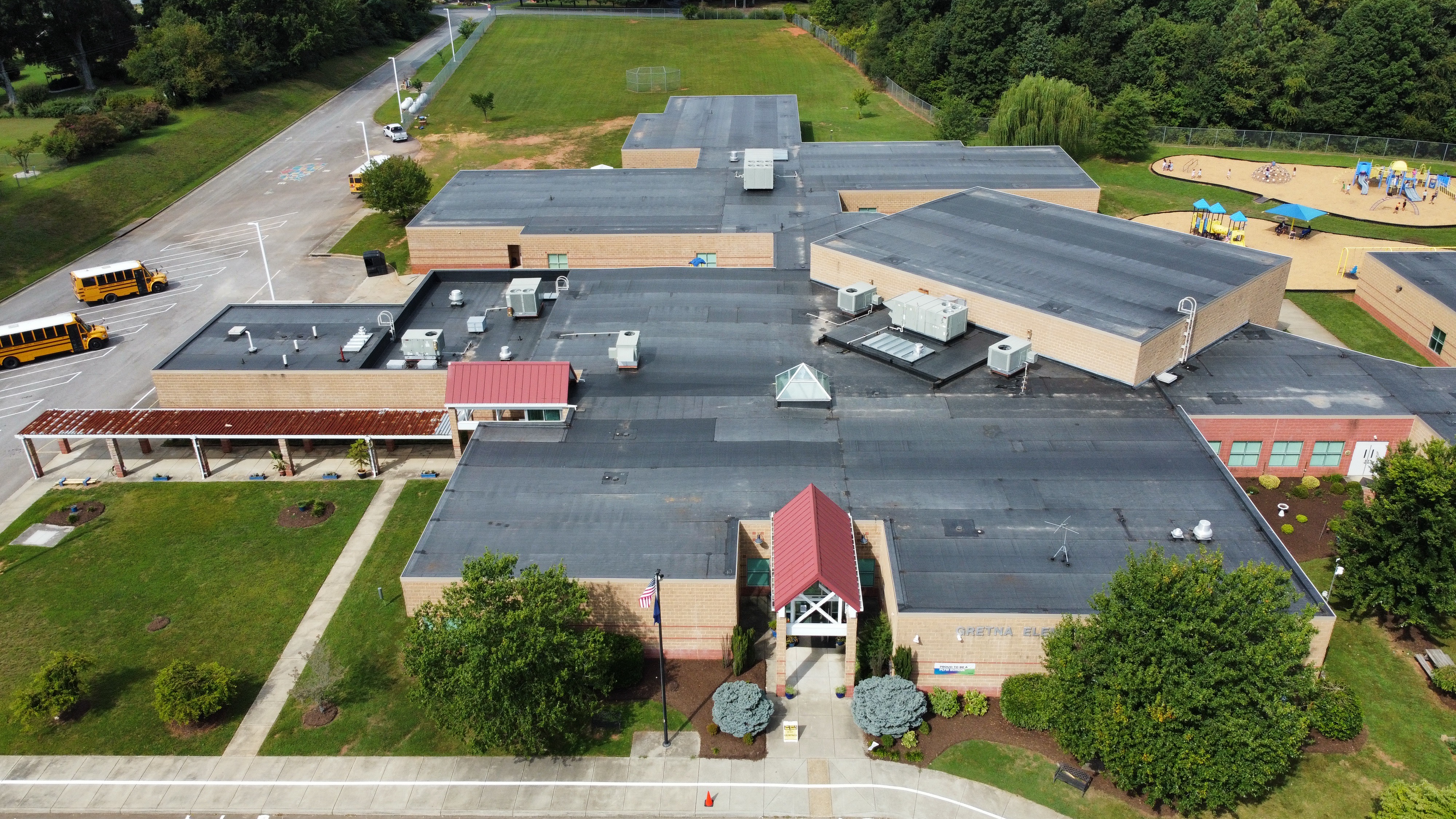
Institutional roofing systems are the standard specification for California public schools. Single-ply TPO or PVC membranes, modified bitumen systems, and in some cases built-up roofing on older buildings represent the primary choices for low-slope school roofs in Fresno. The specification must address the specific demands of school occupancy — heavy foot traffic from maintenance personnel, HVAC equipment access, and the occasional misadventure of students who find their way onto roof areas. Walkway pad systems, robust equipment curb flashings, and penetration details designed for heavy-use environments are all elements of a school-grade roofing specification.
Asbestos-containing materials are present in the roofing systems of many of Fresno Unified's older school buildings. Built-up roof felts, base flashings, and roof mastic from installations prior to 1980 may contain regulated asbestos fibers that must be identified by a California-certified asbestos consultant before any demolition work begins. An abatement contractor holding the required California certifications must manage the removal and disposal of any identified materials under a project-specific asbestos removal plan approved by the Fresno County Air Pollution Control District. Roofing contractors who underestimate the asbestos investigation and abatement scope risk significant unbudgeted costs and schedule delays.
Fresno's hot summer climate creates worker safety challenges that school district facilities directors and roofing contractors must address jointly. Rooftop temperatures during July and August can reach 140°F to 160°F in Fresno, and Cal/OSHA's heat illness prevention regulations require specific protective measures — water, shade, rest breaks, and a written heat illness prevention plan — for all outdoor workers when temperatures exceed 80°F. Early morning start times, typically 5:00 or 6:00 a.m., are standard practice for summer roofing work in Fresno. District facilities directors who understand and support these measures contribute to the safety culture that keeps workers healthy and projects on schedule.
District budget cycles govern the financial planning for school re-roofing projects in Fresno Unified. The district's annual budget, adopted by the Board of Education in late spring, establishes the capital improvement allocations for the following fiscal year. Bond measure spending plans, subject to independent citizen oversight committee review, determine which schools receive roofing work in a given year. Contractors who track the district's bond program planning documents — which are public records — can anticipate upcoming project opportunities and position themselves as knowledgeable partners early in the planning process rather than simply responding to formal solicitations.
- What prevailing wage rate applies to commercial roofers on Fresno school projects?
- The California DIR publishes prevailing wage determinations for Fresno County roofing work. The applicable rate depends on the craft classification — journeyman roofer, roofer foreman, apprentice — and is updated periodically. Contractors must pay the current rate plus fringe benefits and submit certified payroll records to the district. Violations are subject to penalties of $25 per day per worker, plus potential debarment.
- How does DSA oversight work for a Fresno Unified re-roofing project?
- Projects that qualify as State-funded or fall under DSA jurisdiction must have plans approved by DSA before work begins and inspections conducted by a DSA-certified inspector of record throughout the project. The inspector is typically employed by a third-party inspection firm and is paid by the district. Their inspection records become part of the permanent project record and are required for DSA project closeout.
- What is the typical summer construction window for Fresno school roofing?
- Fresno Unified's academic calendar typically provides a window from mid-June through mid-August — approximately 8 to 10 weeks — for summer construction. Some years, professional development days or special programs extend the occupied period at the end of May or early June. Confirm the exact school-year calendar for each campus with the district's facilities department before finalizing your project schedule.
- How are asbestos-containing roofing materials handled at older Fresno schools?
- An accredited asbestos consultant must inspect and sample existing roofing materials before any demolition. Materials testing positive for regulated asbestos must be removed by a licensed California asbestos contractor under an approved abatement plan. Disposal must comply with both state regulations and Fresno County Air Pollution Control District requirements. Budget for asbestos investigation as a preconstruction cost on any school built before 1985.
- How can our contracting firm get on Fresno Unified's approved vendor list?
- Fresno Unified maintains a prequalification process for contractors seeking to bid on district capital projects. The process requires submission of financial statements, safety records, project experience documentation, and references from comparable public school projects. Maintaining current prequalification status allows your firm to respond to formal Invitation for Bid solicitations as they are issued throughout the year.