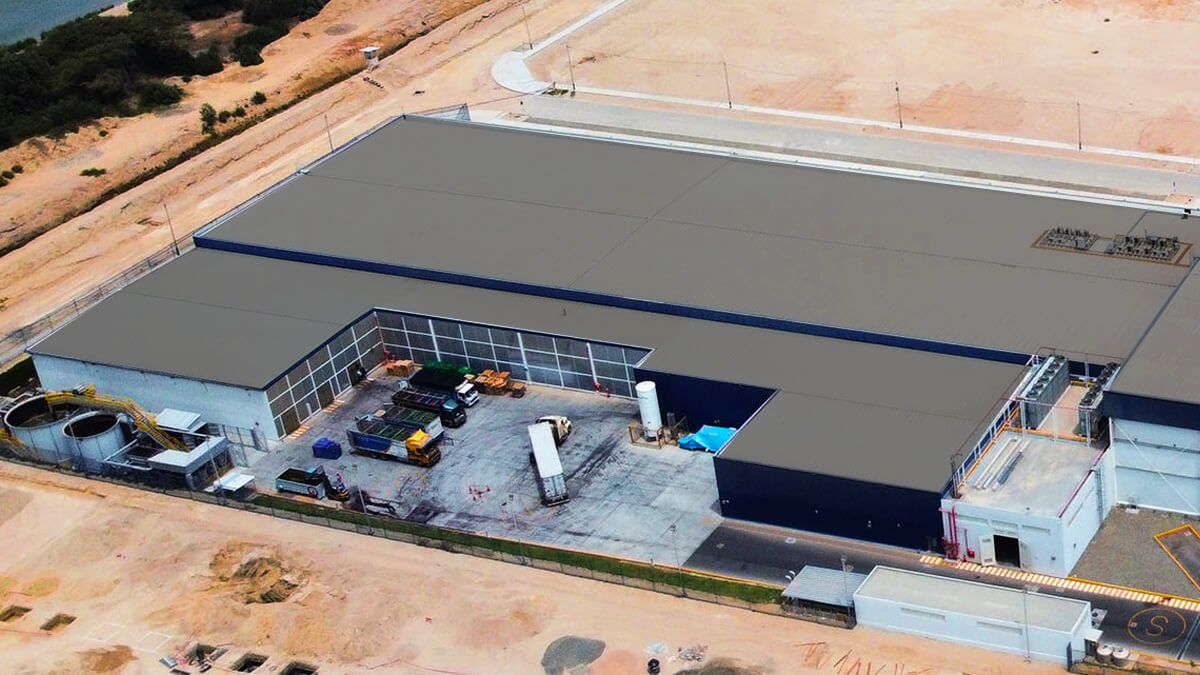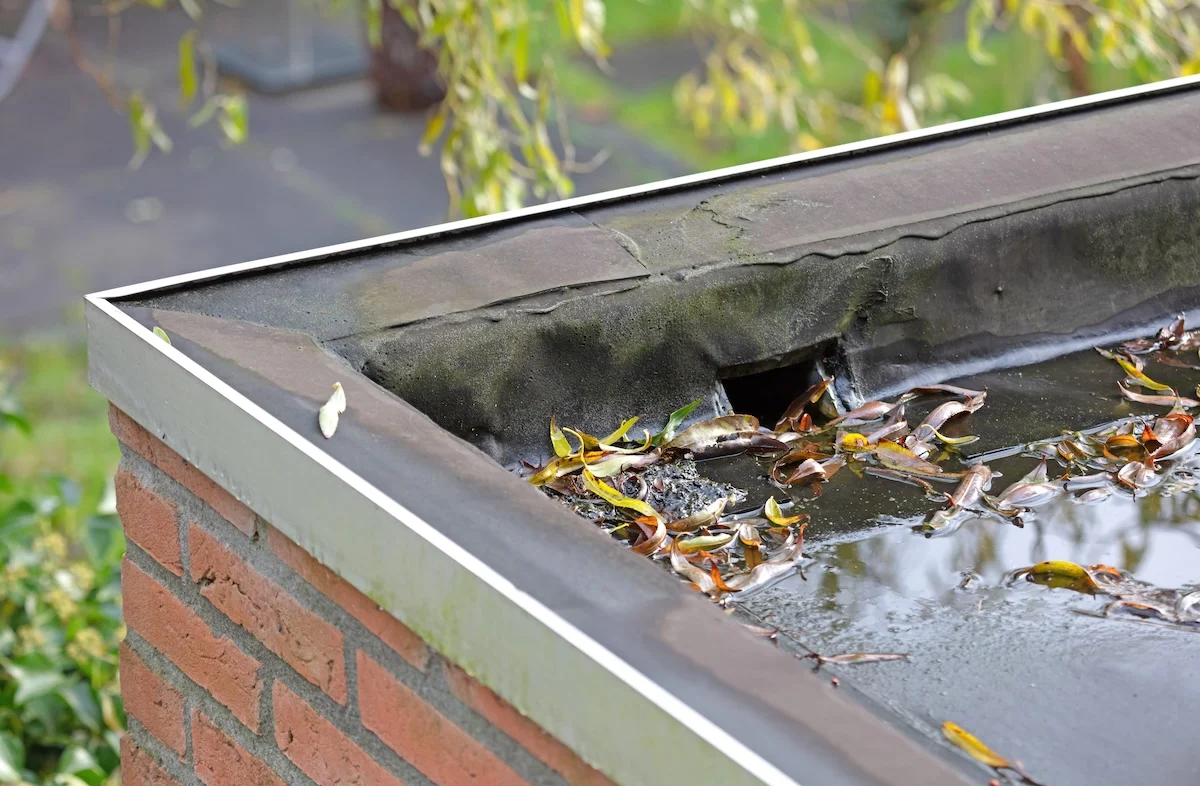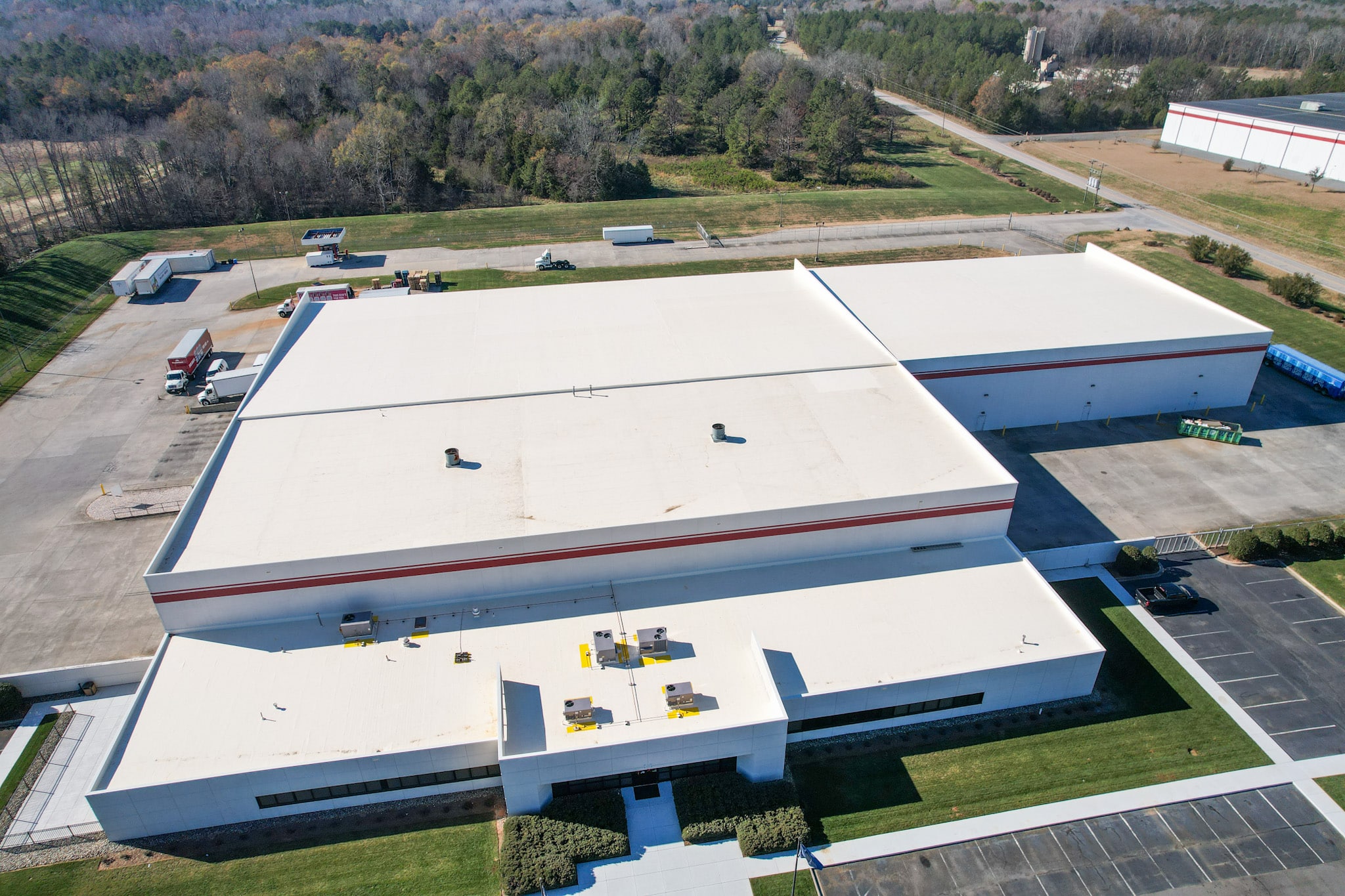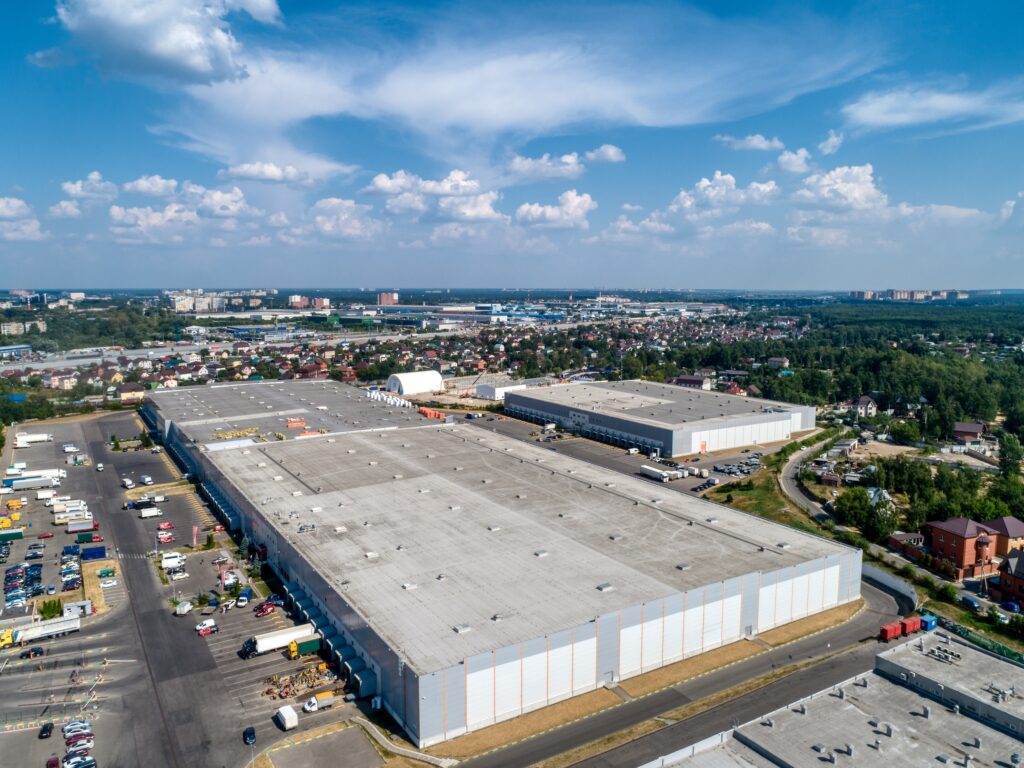
Amazon's massive fulfillment center off East Jensen Avenue in Fresno anchors one of the Central Valley's fastest-growing logistics corridors, and it represents the kind of engineering challenge that separates experienced commercial roofing contractors from the rest of the field. Warehouse and distribution buildings at that scale — often exceeding 500,000 square feet under a single roof plane — demand drainage systems engineered to handle the intense rainfall events that periodically sweep the San Joaquin Valley, particularly during atmospheric river storms that can drop two to three inches of rain in under an hour. A rooftop that sits slightly out of plane can pond aggressively, adding hundreds of thousands of pounds of live load while accelerating membrane degradation.
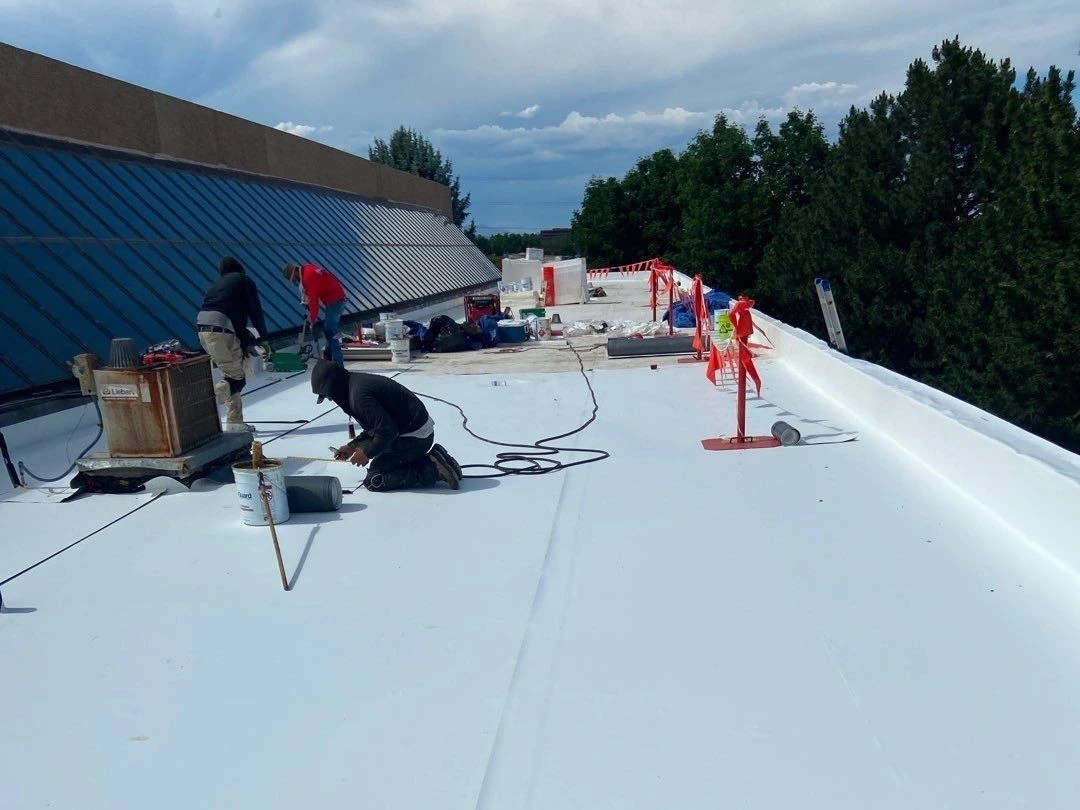
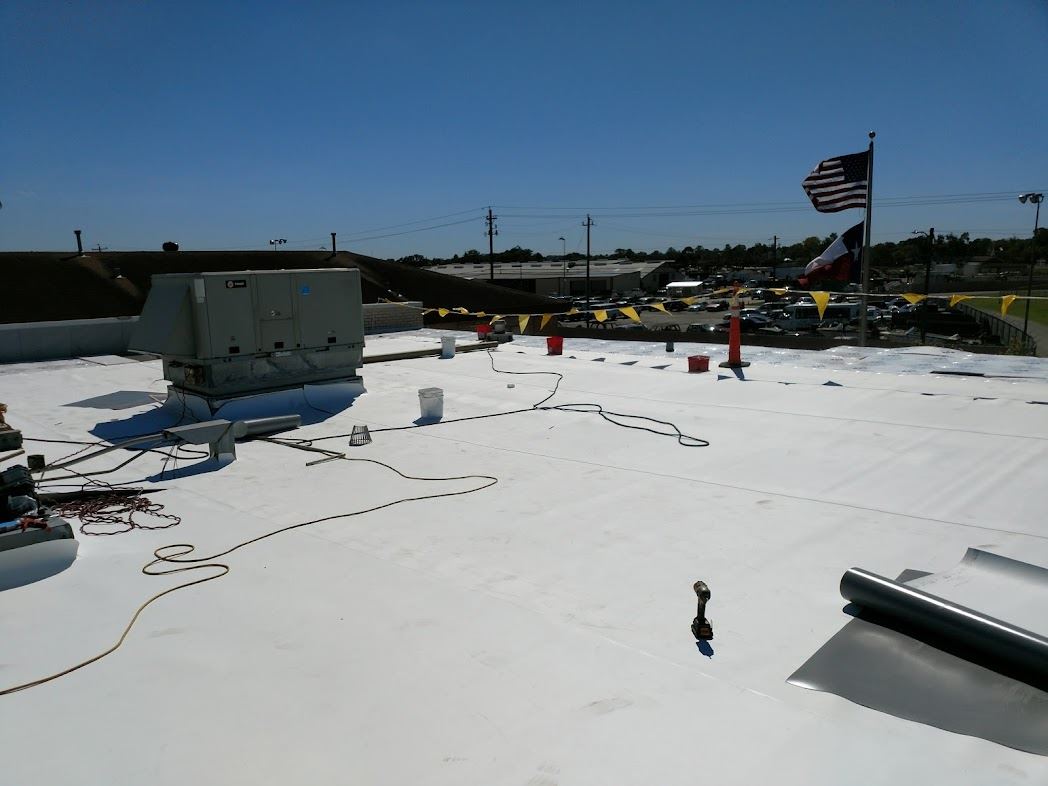
The Central Valley's climate creates a uniquely punishing environment for low-slope warehouse roofs. Fresno averages over 100 days per year above 100°F, and the prolonged UV exposure at that intensity breaks down conventional asphaltic membranes faster than in coastal markets. TPO membranes in 60- or 80-mil thickness have become the dominant choice for new Fresno warehouse construction precisely because the white reflective surface keeps interior temperatures manageable for climate-controlled cold storage and standard ambient DCs alike. EPDM remains competitive on re-roofing projects where the existing substrate is in good condition and the owner wants to avoid a full tear-off, but TPO's weldable seams provide superior long-term watertightness in the expansion-and-contraction cycles driven by temperature swings that can exceed 50°F between a January night and a July afternoon.
Dock door and truck court penetrations are among the most overlooked failure points on large distribution roofs. The header flashing at overhead door bays must accommodate the movement of the building wall as slab-on-grade and tilt-up panels shift seasonally. When a fleet of 53-foot trailers backs into dock positions throughout the day, the vibration transmits up through wall panels and can work flashing loose over a period of years. Proper installation requires flexible counterflashing with adequate reglet depth, backed by a secondary butyl tape seal that bridges any micro-movement without tearing.
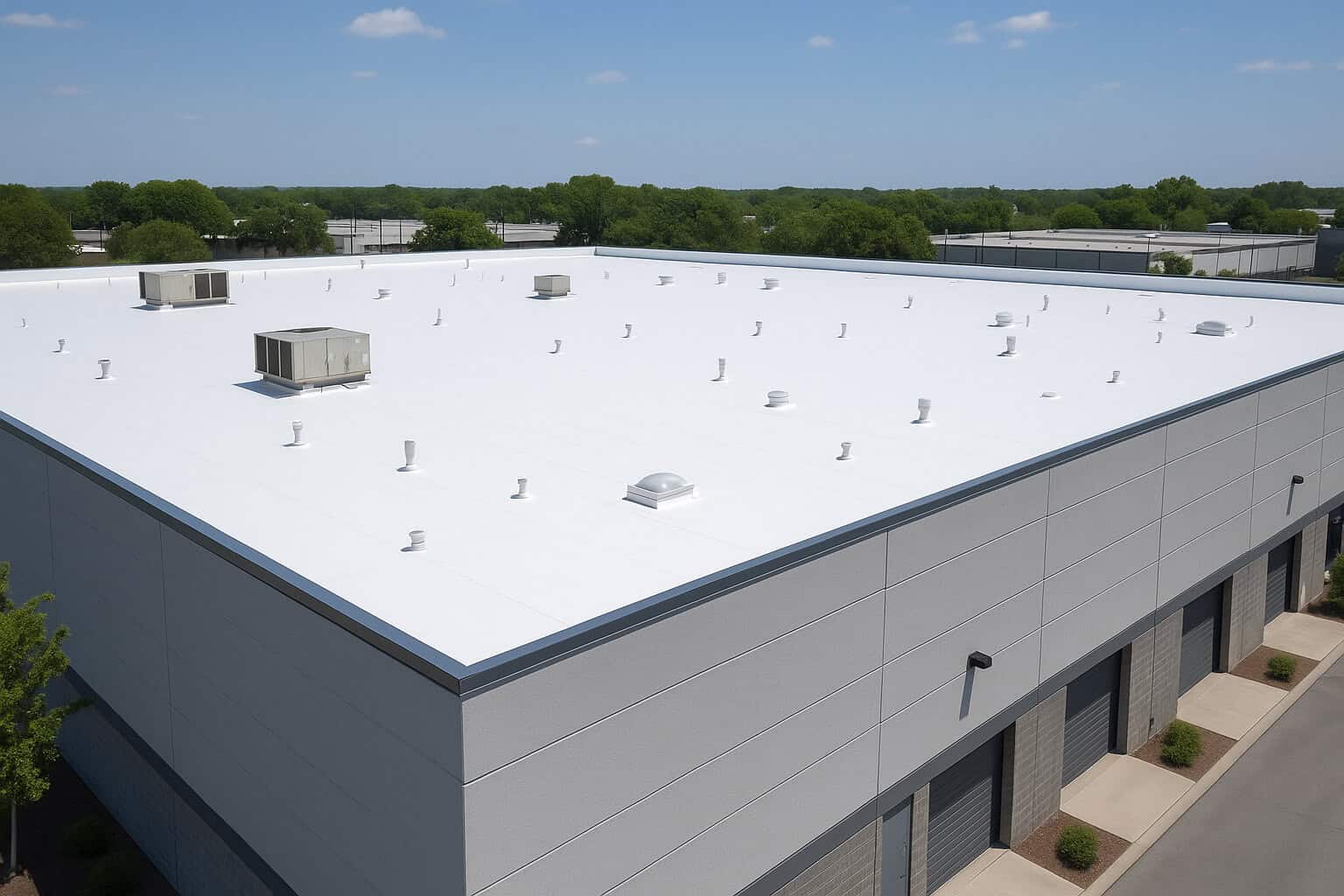
Rooftop ventilation for forklift exhaust and battery-charging areas presents a related challenge. Fresno distribution facilities running large propane forklift fleets require powered exhaust equipment that penetrates the roof at regular intervals. Each penetration is a potential leak point, and the exhaust housings themselves trap heat, creating localized zones of extreme temperature on the membrane surface around the curb. Experienced contractors install pitch pockets or custom-fabricated stainless-steel curb flashings with generous upstands — a minimum of eight inches above the finished roof surface — to keep those details watertight through years of thermal cycling.
Energy efficiency for refrigerated and climate-controlled warehouse space has become a significant driver of roofing decisions in Fresno's logistics market. California Title 24 energy code sets minimum aged solar reflectance and thermal emittance values for low-slope commercial roofs, and the California Energy Commission has tightened those thresholds in recent years. Meeting and exceeding those minimums with a high-performance TPO or PVC membrane can reduce peak cooling loads meaningfully, which matters enormously when a facility is running refrigeration compressors around the clock to maintain 34°F in a perishable-goods section.
Roof-deck attachment is another area where Valley conditions demand attention. The expansive clay soils underlying much of the Fresno basin cause differential settlement in tilt-up concrete buildings, and that settlement can telegraph stress into steel roof decking over time. Before any new membrane installation, a structural scan of the deck is advisable to identify any buckled or separated panels that would compromise the pull-out resistance of fasteners in a mechanically attached system. Fully adhered systems eliminate the pull-out concern but require a clean, dry substrate and careful primer selection for the dry-arid conditions typical of summer installation windows.
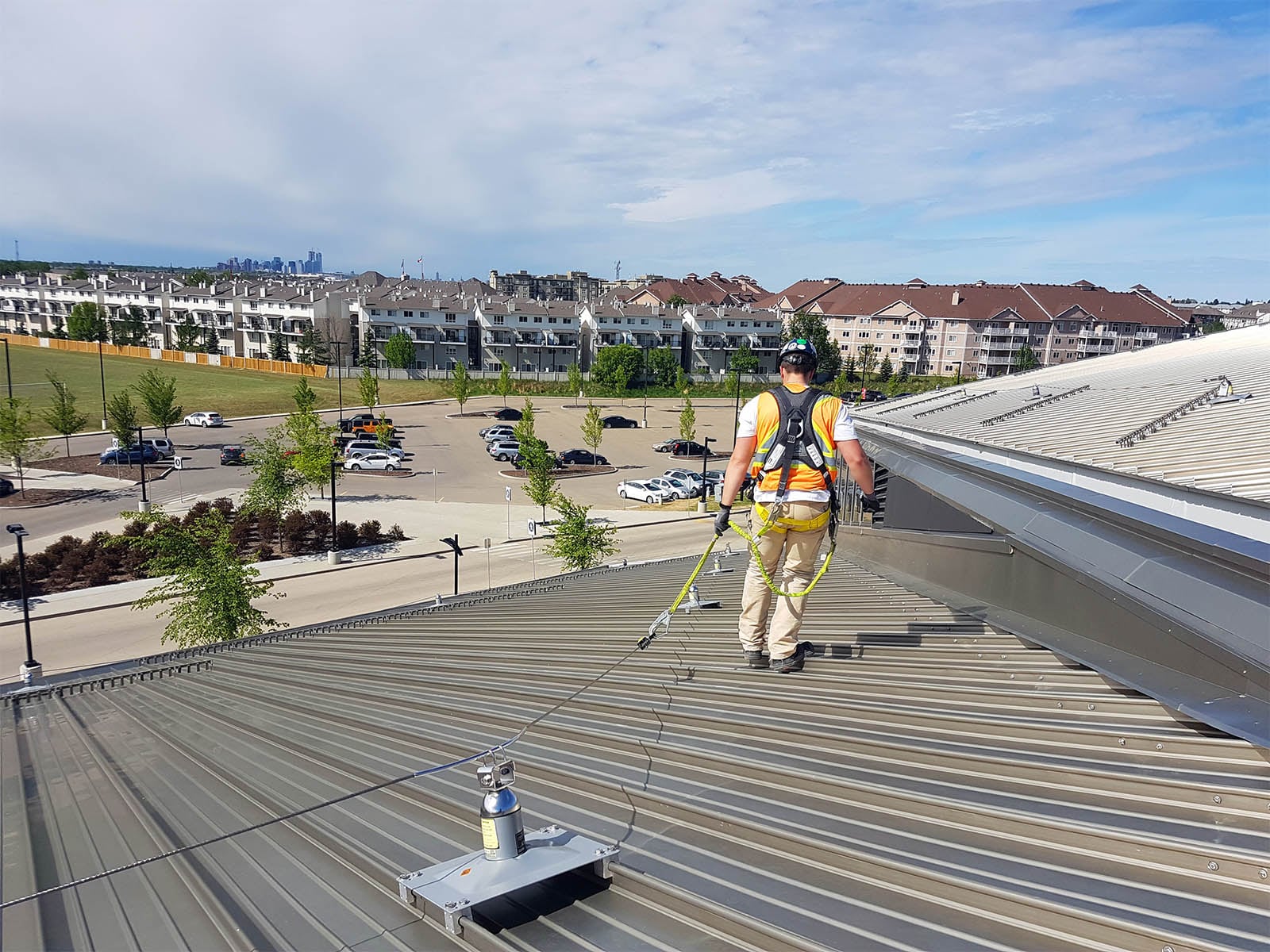
Local roofing contractors working the Fresno market must carry California contractor's license classification C-39 and maintain workers' compensation and general liability coverage meeting the Valley's construction market norms. Large DC operators and their third-party property managers typically require contractors to carry $5 million in commercial general liability before allowing rooftop access, reflecting both the asset value of the building and the operational disruption a roofing-related incident could cause to a facility processing thousands of packages per day.
Preventive maintenance programs are essential for keeping warranty coverage intact on Fresno warehouse roofs. Most TPO manufacturers' 20-year NDL (no-dollar-limit) warranties require documented annual inspections by a certified contractor, immediate repair of any punctures or open seams, and proper documentation of any rooftop equipment added after the original installation. Many DC operators tie these inspection cycles to their year-end capital planning reviews, using the inspection report to budget proactively for seam resealing, re-caulking of penetrations, or partial section replacement before minor issues become major water-intrusion events.
Fresno's commercial roofing market has consolidated significantly as institutional owners have acquired large blocks of Valley industrial real estate. Those owners expect contractor relationships backed by strong project management capabilities, digital inspection documentation, and the ability to mobilize quickly when a storm event creates emergency call-backs across multiple properties simultaneously. Contractors who can provide all-in-one service — inspection, repair, coating, and full replacement — hold a distinct advantage in retaining long-term maintenance contracts with these portfolio owners.
- What roof membrane is best for a Fresno warehouse?
- TPO in 60- or 80-mil thickness is the most widely specified membrane for new Fresno warehouse construction because its white reflective surface handles Central Valley heat well, meets California Title 24 energy requirements, and its heat-welded seams provide long-term watertightness through the region's extreme temperature swings.
- How does Fresno's heat affect warehouse roof longevity?
- With over 100 days above 100°F annually and intense UV exposure, dark or degraded membranes fail faster than in coastal markets. High-reflectance TPO or coated EPDM systems significantly extend service life by reducing thermal cycling stress on seams and flashings.
- What drainage standard applies to large Fresno distribution roofs?
- California Plumbing Code and local Fresno ordinances require primary and secondary (overflow) drainage sized for a 100-year storm event. On large roofs, this typically means interior drains supplemented by scuppers at parapet walls as overflow protection.
- Do dock door flashings require special treatment in the Central Valley?
- Yes. Tilt-up wall movement from seasonal soil expansion and contraction requires flexible counterflashing details at dock door headers. A butyl tape secondary seal behind the counterflashing is standard practice to accommodate micro-movement without allowing water infiltration.
- What warranty documentation does a Fresno DC operator typically need?
- Most institutional property managers require a manufacturer's NDL warranty of at least 20 years, an annual inspection protocol, and a contractor-issued workmanship warranty of at least two years. All rooftop equipment additions after initial installation must be registered with the manufacturer to keep the warranty intact.