The headquarters campus of Granville Homes at Shaw and First avenues in Fresno represents the kind of professionally managed Class B office asset whose roofing decisions affect not just building performance but the company image visible to clients, recruits, and the broader business community. Fresno's office market is concentrated along the north-south Highway 99 spine, with Class A buildings clustered in the Fig Garden and Old Fig Garden districts and Class B suburban campuses filling out the north Fresno office corridors. Commercial roofing work on occupied office buildings in this market demands a level of logistical sophistication and aesthetic awareness that warehouse re-roofing projects do not require.
Occupied-building protocols for Fresno office re-roofing projects begin with a pre-project coordination meeting with building management, tenants, and the contractor to establish work zones, daily access windows, noise restrictions, and odor management procedures. The Central Valley's summer heat means that most roofing work on occupied Fresno office buildings is scheduled for early morning — contractors typically mobilize at 5:00 AM to avoid the periods of peak heat and to maximize productive work hours before afternoon temperatures drive workers off the roof. Tear-off operations that generate dust and odors are restricted to agreed windows, and HVAC intake dampers must be coordinated with the contractor's schedule to prevent drawing roofing fumes into occupied suites.
Aesthetics and green roof options are increasingly part of the commercial roofing conversation for Fresno Class A office owners. Several north Fresno Class A buildings have installed vegetated roof sections over occupied conference room areas as a visible expression of sustainability commitment, using modular tray systems that allow installation without compromising the underlying waterproofing membrane. The Central Valley's hot, dry summers require drought-tolerant sedum species for any vegetated roof application, with deep enough tray modules to maintain adequate soil moisture between irrigation cycles. Properly designed vegetated sections increase the insulation value of the assembly and reduce peak cooling loads in the suites below, providing both aesthetic and energy performance benefits.
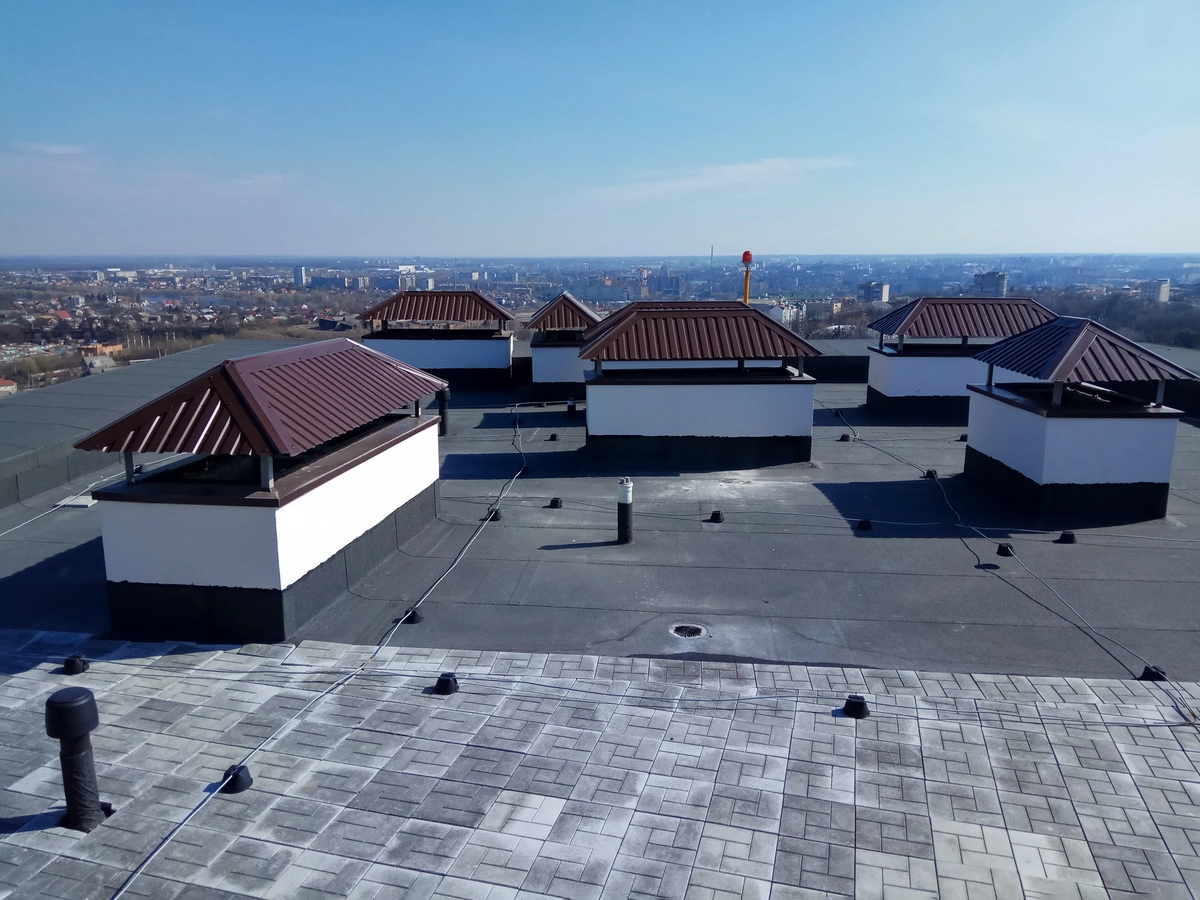
Multi-RTU coordination on Fresno office building roofs requires careful scheduling to maintain conditioned air for all occupied spaces while sequential units are isolated, serviced, and connected to new curbs during re-roofing. Class B office buildings in the Fresno market typically have five to fifteen RTUs on a given building, and the re-roofing contractor must work with the building's HVAC service provider to develop a sequencing plan that prevents any floor from losing cooling for extended periods during the Central Valley's brutal summer heat. Temporary cooling provisions — portable units serving critical server rooms or executive suite areas — may be necessary during certain phases of a phased RTU curb replacement.
California's Title 24 energy code imposes strict requirements on replacement roofs for commercial office buildings. When replacing more than 50% of a roof surface, the entire project must comply with current Title 24 standards for solar reflectance, thermal emittance, and insulation R-value. For Climate Zone 13, which covers Fresno, the minimum cool-roof requirements are among the most demanding in the state, reflecting the Central Valley's extreme heat load. High-performance TPO or PVC membranes with aged solar reflectance above 0.55 meet these requirements, and specifying insulation upgrades to R-25 or better during the re-roofing project ensures compliance with both current energy code and anticipated updates in the next Title 24 revision cycle.
Lease renewal protection is a significant financial consideration for Fresno office building owners undertaking roofing projects. Institutional tenants — law firms, financial services companies, medical practices — expect dry, comfortable spaces and will use a poorly managed re-roofing project, or evidence of deferred maintenance, as leverage in lease renewal negotiations. Proactively communicating a roofing project plan to tenants, executing it with minimal disruption to their operations, and providing written confirmation of the new warranty coverage and expected roof service life are powerful tools for retaining tenants at favorable lease rates.
Reflective and cool membrane selection for Fresno office buildings extends beyond code compliance to comfort management for top-floor occupants. A Class A office building whose top floor runs 5–8°F warmer than lower floors during summer afternoons will face tenant complaints and, eventually, tenant turnover as the more desirable lower floors are retained while upper floor suites are vacated. High-reflectance TPO membranes combined with R-25 or better insulation can effectively eliminate this temperature stratification issue, improving the commercial appeal of all floor levels in a multi-story office building.
California contractor licensing requirements for office building re-roofing work include not only the C-39 Roofing classification but, in many cases, coordination with C-20 HVAC contractors for RTU disconnection and reconnection and C-33 Painting contractors if architectural coatings are part of the scope. Fresno office building owners should structure their project contracts to clearly identify the responsibilities of each licensed trade and the general contractor or construction manager coordinating the work, avoiding the ambiguity that can create finger-pointing when sequencing issues arise between trades on an occupied building project.
Preventive maintenance programs for Fresno office roofs should include spring and fall inspections with written documentation provided to building ownership, not just to the maintenance engineer. When ownership is considering a lease extension, sale, or refinancing, a documented history of professional roof maintenance is a due-diligence positive that reduces buyer or lender concerns about deferred maintenance liabilities. Contractors who provide maintenance records in formats compatible with building management software — ARGUS, MRI, or Yardi — add value to the relationship beyond the purely technical scope of roofing services.
- What occupied-building protocols apply to Fresno office re-roofing projects?
- Contractors typically mobilize at 5 AM to avoid peak heat, coordinate with HVAC teams to close outside air intakes during tear-off, restrict odor-generating work to agreed windows, and communicate daily schedules to building management. Pre-project tenant coordination meetings establish noise and access limitations before work begins.
- Does California's Title 24 apply when re-roofing a Fresno office building?
- Yes. Replacing more than 50% of a roof surface triggers full Title 24 compliance, including minimum solar reflectance, thermal emittance, and insulation R-value requirements for Climate Zone 13. High-performance white TPO or PVC membranes combined with upgraded insulation to R-25 or better meet current standards and anticipate future code tightening.
- What green roof options work in Fresno's hot, dry climate?
- Drought-tolerant sedum species in modular tray systems with adequate soil depth for moisture retention between irrigation cycles are the appropriate choice for Fresno's Mediterranean climate. Modular tray systems protect the underlying waterproofing membrane while providing insulation and cooling load reduction benefits for suites below.
- How does a well-executed re-roofing project protect lease renewal leverage for Fresno office owners?
- Proactive tenant communication, minimal operational disruption, and documented new warranty coverage demonstrate professional asset management that tenants value. Presenting tenants with a roofing project plan and completion confirmation removes a potential negotiating lever and reinforces the owner's commitment to building quality at lease renewal time.
- What contractor licenses are typically needed for a Fresno office re-roofing project?
- A California C-39 Roofing license is required for the membrane work. RTU disconnection and reconnection requires a C-20 HVAC license, and any architectural coatings or caulking work may involve C-33 Painting scope. Clear trade responsibility assignments in the project contract prevent ambiguity when coordinating between licensed trades on occupied building projects.